
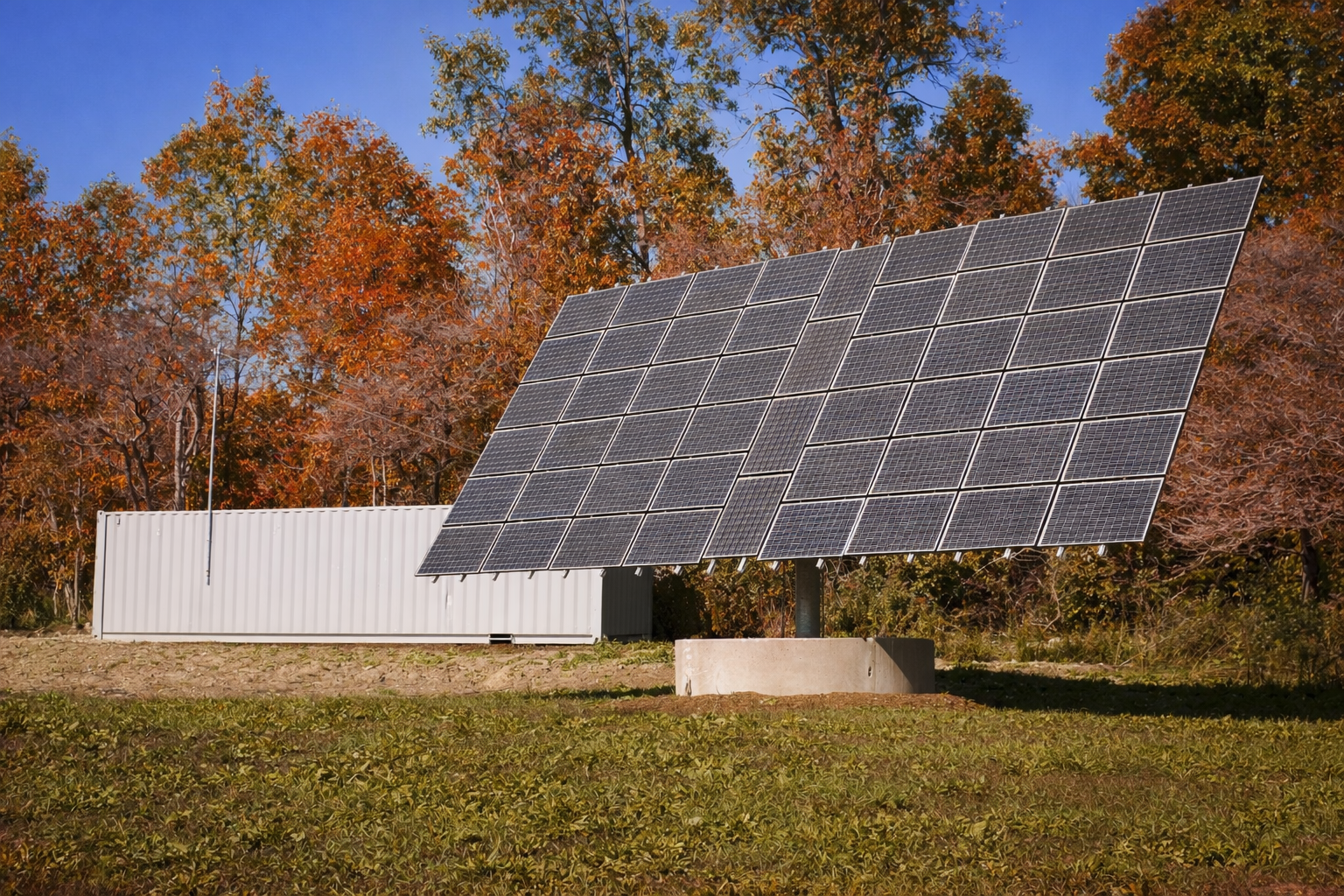
Mapleview Energy is deploying its first paid pilot project, the Ontario Agricultural Energy Storage Pilot: a 600 kWh battery energy storage system (BESS) at a working agricultural site in southwestern Ontario. The system will integrate with the site's existing solar installation, providing on-site energy storage that reduces grid dependence and improves operational resilience.
From prototype to deployment
Mapleview Energy built and tested its BESS prototype at Ontario Tech University's battery laboratory and completed third-party performance validation through an Ontario Centre for Innovation-supported program. This first paid deployment marks the company's transition from research and development into commercial operation.
The system uses repurposed electric vehicle batteries that have been sourced, tested and graded using procedures informed by UL 1974, the standard governing the evaluation of batteries for repurposing. Each battery module undergoes rigorous health assessment to ensure it meets the performance and safety requirements for stationary energy storage applications.
System design and capabilities
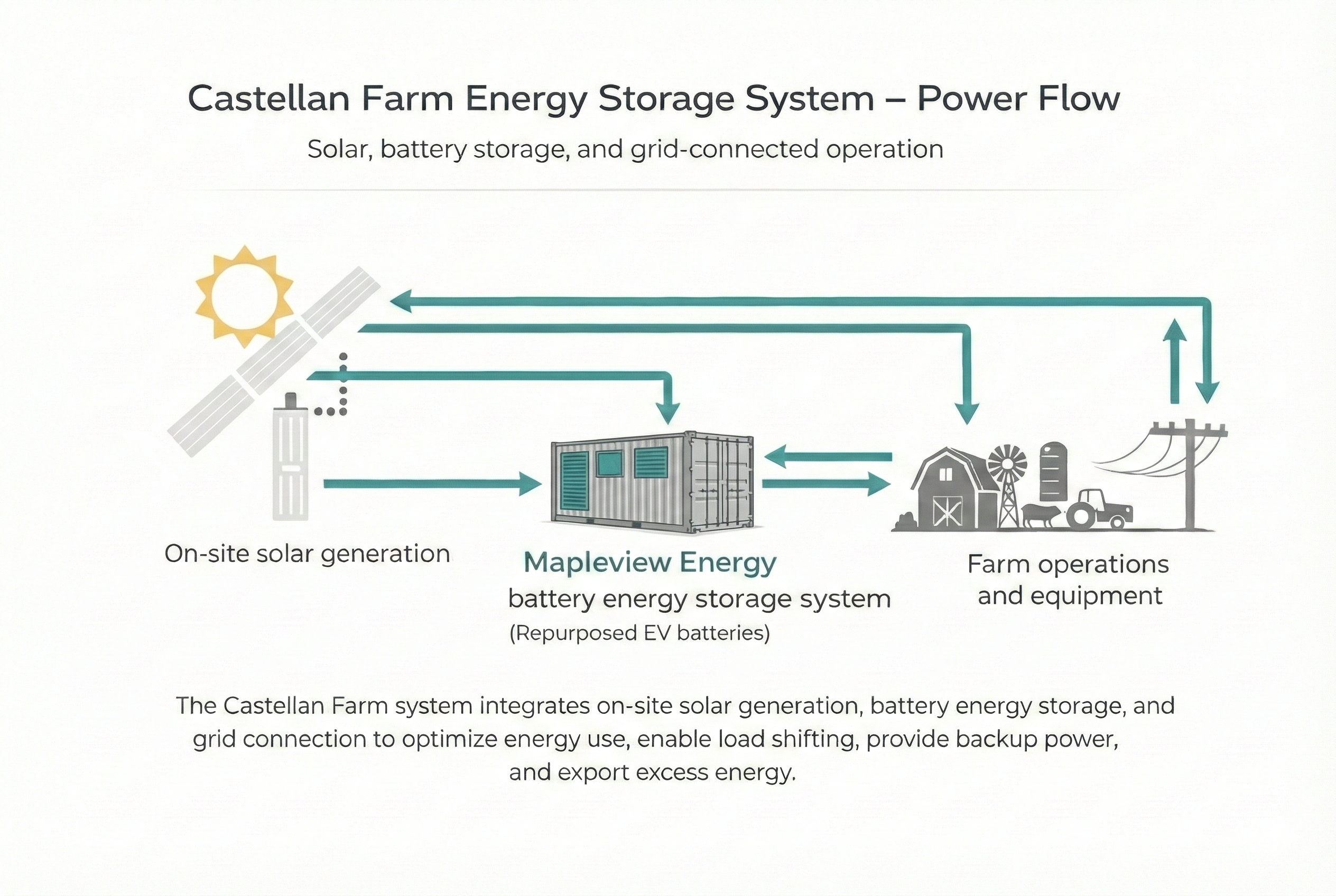
The 600 kWh system is designed as a modular energy storage system integrated with the site's existing solar installation. Key capabilities include:
- Solar energy storage and load shifting to increase on-site use of generated electricity
- Peak-demand management to help reduce electricity costs
- Resilience and backup support for selected farm loads
- Remote system monitoring, controls and performance reporting
The modular design means the system can be expanded as the site's energy needs grow. Mapleview Energy's battery management and controls architecture continuously monitors cell voltage, temperature, state of charge and other operating conditions to support safe and efficient system operation.
Why second-life batteries for agriculture
Agricultural operations can face limited grid capacity, exposure to peak electricity costs and operational risks associated with outages. Many farms are also investing in on-site renewable generation, creating a need to better align when electricity is produced with when it is consumed.
By using repurposed EV batteries rather than new cells, the system delivers energy storage at a lower cost while extending the useful life of existing battery materials before they are ultimately recycled. Many retired EV batteries retain substantial usable capacity, depending on their age, chemistry, operating history and condition. After testing and grading, suitable batteries can be repurposed for stationary applications where automotive weight and packaging constraints are less important.
What this means for Mapleview Energy
The project is an important milestone in demonstrating Mapleview Energy's end-to-end capability, from sourcing and testing retired EV batteries through system design, integration, deployment and ongoing monitoring. The data and operational experience from this project will directly inform our approach to future deployments across agriculture, manufacturing, and other commercial and industrial sectors in Ontario.
Installation and commissioning are planned for later in 2026, followed by ongoing performance monitoring and operational data collection.