
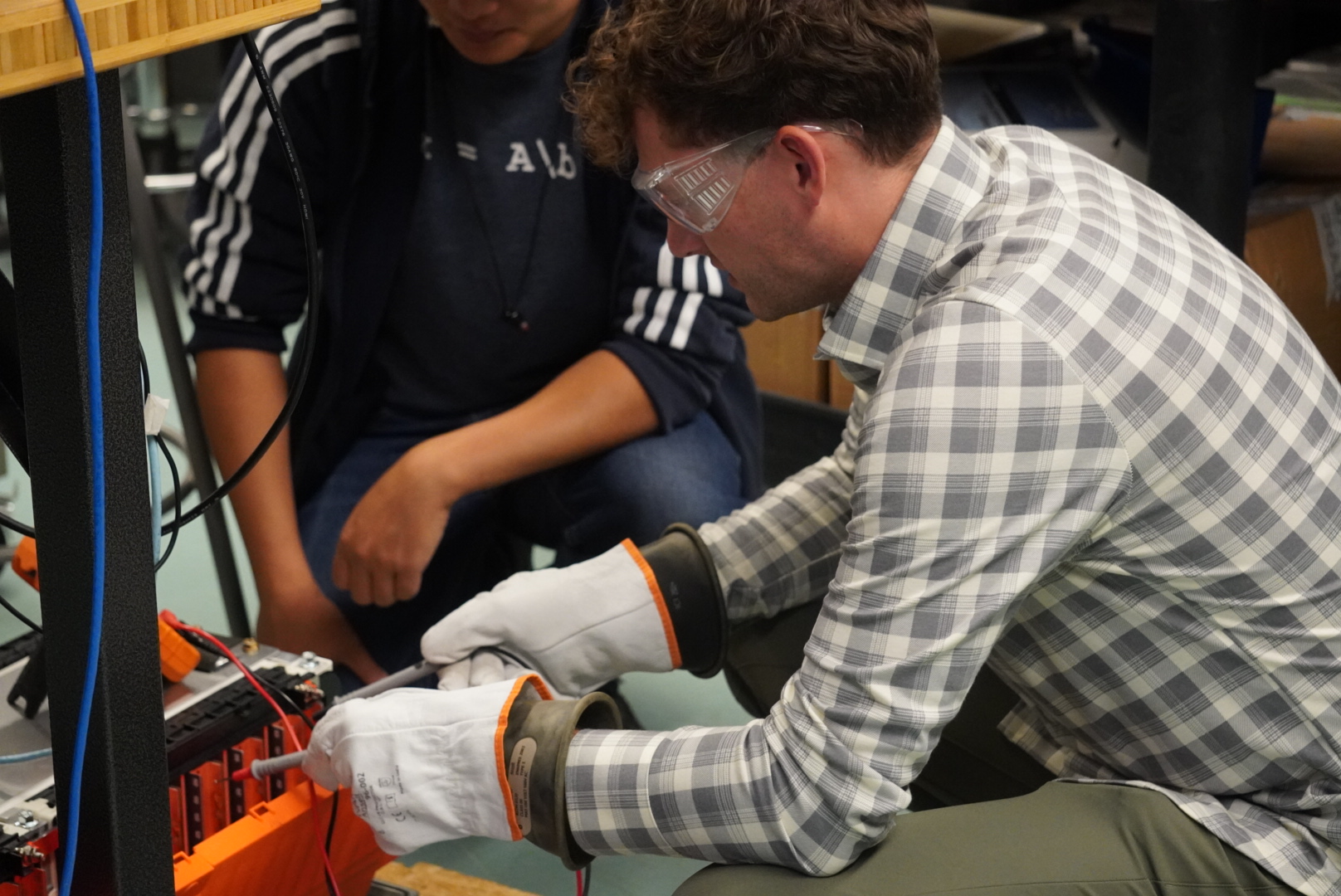
Mapleview Energy has partnered with Dr. Sheldon Williamson's Battery Lab at Ontario Tech University to develop its battery energy storage system (BESS) prototype and establish UL 1974-aligned standard operating procedures for battery repurposing. This collaboration brings together Ontario Tech's deep expertise in battery systems engineering with Mapleview Energy's focus on second-life battery applications.
Developing the BESS prototype
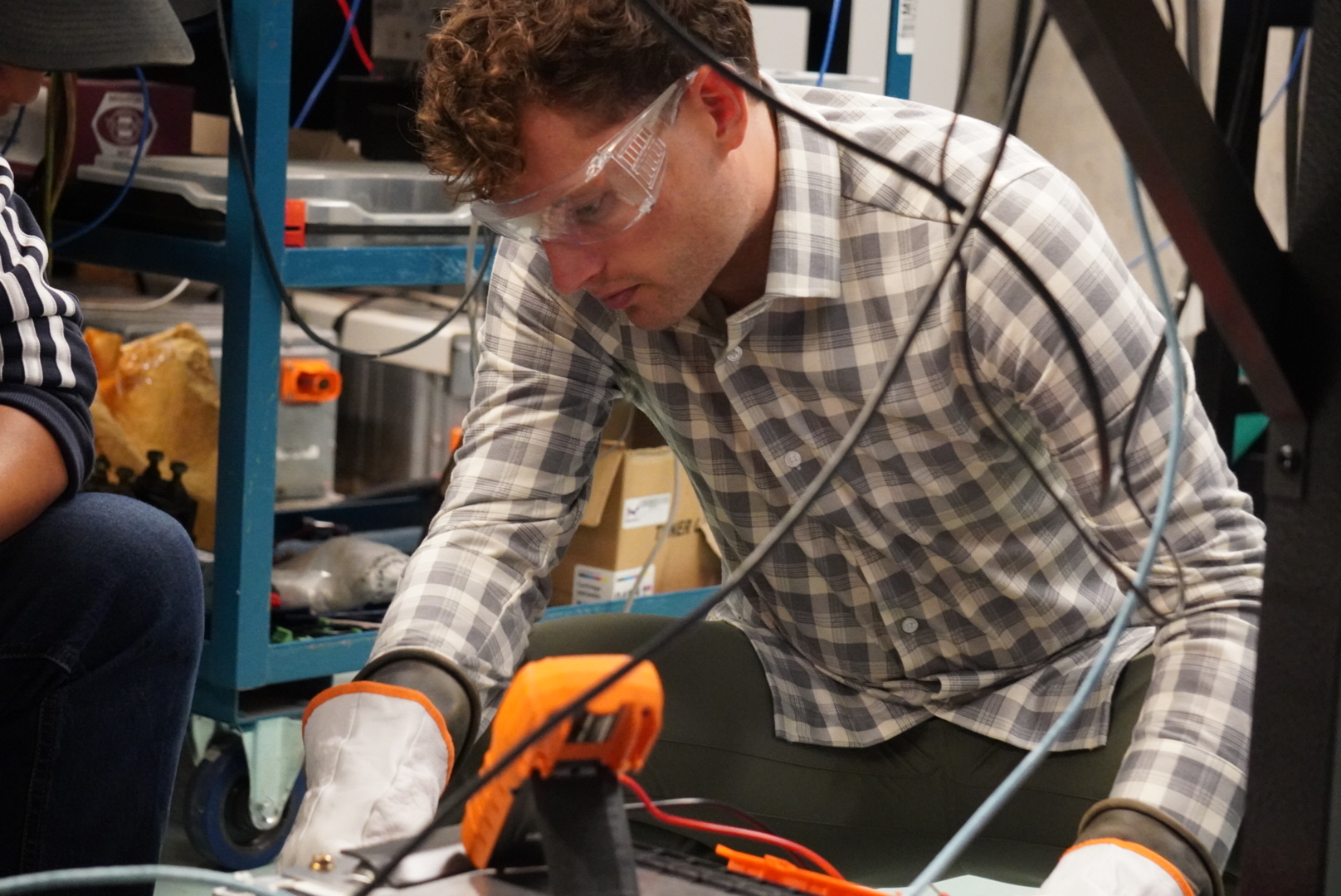
The partnership with Ontario Tech University's Battery Lab has been central to Mapleview Energy's prototype development. Working within the lab's testing facilities, our team has been able to characterize retired EV battery modules, develop integration architectures, and build and test our first BESS prototype.
The prototype development process involved several key stages:
- Battery characterization: Testing retired EV battery modules to understand their remaining capacity, internal resistance, and degradation patterns.
- Architecture design: Designing the electrical and mechanical architecture for integrating multiple battery modules into a unified storage system.
- BMS development: Developing the battery management system that monitors and controls cell-level parameters including voltage, current, temperature, and state of charge.
- System integration: Assembling the complete prototype and conducting initial performance testing.
Aligning with UL 1974
A critical output of this partnership is the development of standard operating procedures (SOPs) aligned with UL 1974, the standard for evaluation of repurposed batteries. UL 1974 establishes requirements for the sorting, grading, and reassembly of battery packs, modules, and cells originally manufactured for use in other applications. While these SOPs do not constitute UL certification, they are designed to follow the standard's framework as a foundation for safe and structured battery repurposing.
Aligning with UL 1974 is important for several reasons:
- It provides a recognized framework for ensuring the safety of repurposed battery systems.
- It establishes traceability requirements that track batteries from their original application through to their second-life use.
- It defines testing protocols that verify repurposed batteries meet minimum performance and safety thresholds.
- It supports regulatory compliance and customer confidence in second-life battery products.
The SOPs developed through this partnership cover the full repurposing workflow: receiving and initial assessment, disassembly, module-level testing, grading, matching, and integration into the BESS architecture.
The value of academic partnerships
Working with Ontario Tech University has given Mapleview Energy access to specialized testing equipment, deep battery engineering knowledge, and a collaborative environment that accelerates learning. Dr. Williamson's lab has extensive experience in battery systems for electric mobility and energy storage, making it a natural partner for developing second-life battery technology.
This kind of academic-industry collaboration is particularly valuable in emerging technology areas like battery repurposing, where standardized processes and best practices are still being established. The knowledge generated through this partnership contributes not only to Mapleview Energy's commercial development but also to the broader body of knowledge around safe and effective battery reuse.
Looking ahead
With the prototype developed and SOPs established, the next step is independent performance validation. The prototype will undergo comprehensive testing through the Ontario Centre for Innovation's Technology Access Program, providing third-party verification of system performance and safety before commercial deployment.